Palmerston Island
Well. What an amazingly unusual island and what a complete hoot we had….. About half way between French Polynesia and Tonga is this incredibly isolated atoll – the whole atoll is about six miles in diameter and consists of a circular reef enclosing a deep lagoon. There are numerous islets dotting the outer reef but only Palmerston is actually inhabited. This is a tiny patch of sand maybe a mile and a half long in its entirety. History – in 1863 William Marsters arrived there (questionable ship’s carpenter from Gloucester who liked the idea of polygamy there not being much of that in Gloucester!) and then with the help of three Polynesian wives planted palms and harvested copra and produced 21 children and created his own island dynasty. Unlike all the other Cook islands the official language of Palmerston is English rather than Maori and the land is owned by just one family – yes the Marsters. The lineage of all Palmerston islanders can be traced back to that one man. Every person on the island is a Marsters – very strange and special place – slightly reminiscent methinks of Romney Marsh!
There are eight mooring buoys dotted just outside the reef and they really are totally in the middle of nowhere – we’d sailed five nights and then there it is! We radioed in and Bob Marsters and his daughter came out in a small metal dinghy to show us the buoy and to offer his welcome – although he totally did not crack a smile! We can’t go ashore until customs come on board the following morning (the night was spent on watch to check that the wind didn’t shift and throw us back onto the reef) Martha – who gets very sea sick and has to lay down flat on the front of the boat after doing her job which was spraying a can of insecticide around below…. then Arthur who is the Island FD comes on board and takes 145USD from us whilst filling in numerous forms and bitching about ‘the bastards who run the island’ – Palmerston is now allowed to check in visiting yachts to the Cook Islands and they also get to keep the fees which gives them extra income.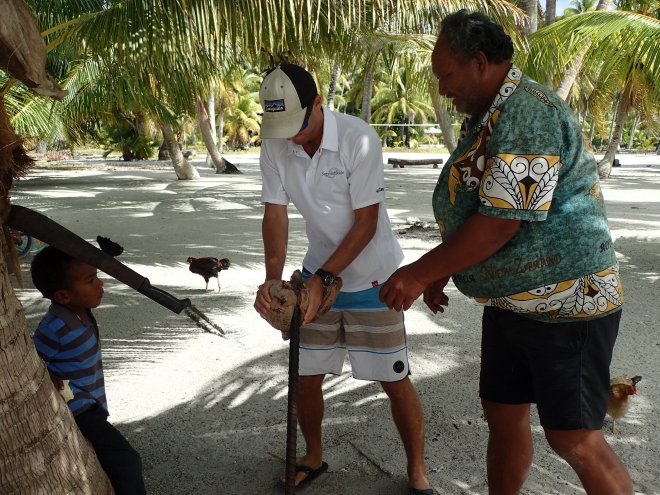
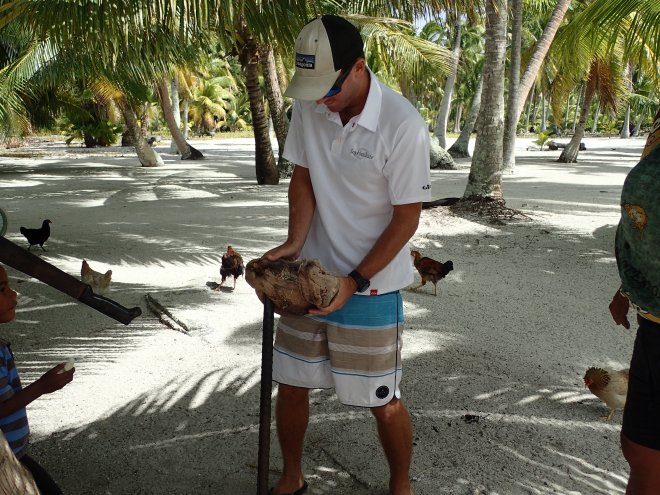
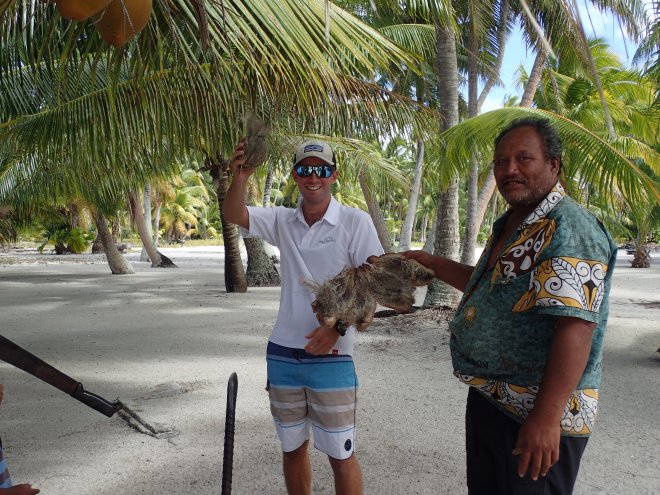 All the contact these guys have with the outside world comes from visiting yachts or freight vessels and there are very few of them – yachties are entitled to be given a welcome with one of the islanders being appointed as your host. It is then their job to go and get you from your boat and bring you to their island and show you around and extend hospitality. Bob Marsters was our host and took us to his family home and introduced his wife and three children. His three other children have left the island and gone to Australia but because education in the island is a problem they do not have qualifications for the outside world (says Bob) and he tells them they are much richer living in Palmerston and subsisting from the land and the sea. Palmerston has its own council comprising of six of the most senior (in terms of age) men – two from each branch of the family to represent each of the first three wives from whence they all descend. The island is split into three also representing those three wives and their offspring. We were given lunch consisting of rice, chicken, noodles and wahoo together with some small pancakes made from coconut and flour. Bob showed us the three different types of coconut (different ages) and what they were used for demonstrating how to hull one which Oscar had been really keen to have a go at for a while now. No part of the palm is wasted with fronds used for roofing when plaited, firewood and kindle, the husks are used for cooking fuel and some of it for food for their chickens and pigs. Bob took us off to meet Bill who lived in the centre of the island and was such a hoot – at one point I thought we were being kidnapped! As I was taken deeper into his house and shown his three huge fridge freezers it was very funny and a little like a horror movie!! Fortunately, Bill wasn’t a mad axe murderer and gave us ice cream cones whilst showing us his family photographs which included his Grandfather on board the Royal yacht Britannia when Philip visited back in 1972 and this was very proudly displayed. Their British heritage is incredibly important to them and everywhere you go portraits of Queen Elizabeth are hanging on walls – in triplicate in some instances.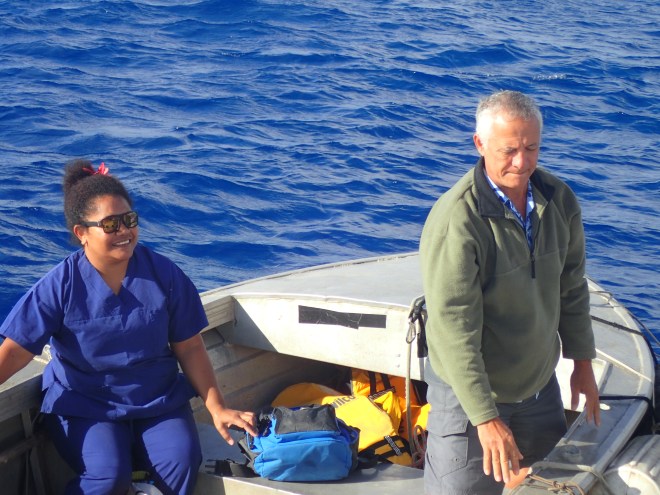
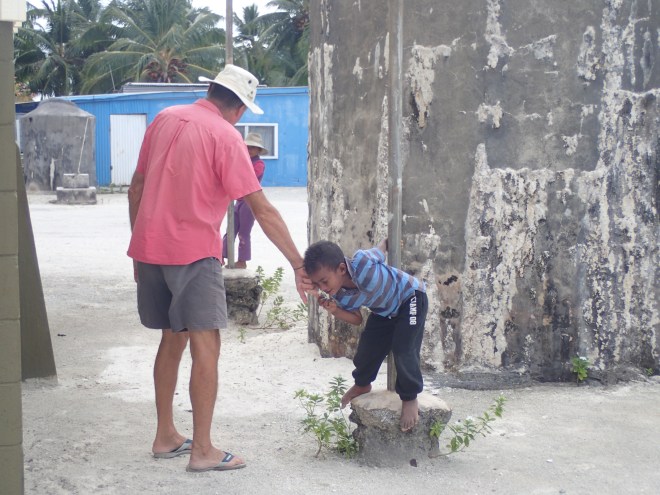
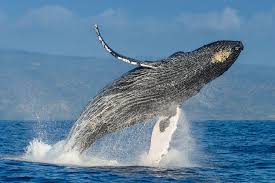
Nothing was asked of us nor expected in return for these kindnesses and this hospitality – which as I say goes back to their early heritage and is very important for them as islanders to continue. We were able to give them a huge length of floating line which we had been carrying since the Panama Canal crossing and also 200 metres of extremely strong fishing line both of which they were grateful for. A freight ship visits the island three times a year and drops off supplies which have to be pre-ordered and pre-paid. The atoll has its own sub species of humpback whale recently discovered – I saw one – totally awesome creatures that are simply out of this world.
We were given a complete tour of the island (obviously didn’t take long!) including the island school which is run by a couple who have been there 18 months – Melissa from South Africa and Dan from US (met and got married in Korea) – they teach 15 children here from 5 to 19 and what a task that is. The pair of them were so totally committed to what they were there to do and we were just full of admiration for them. The island has a small church and a missionary from the Church of Seventh Day Adventists who has been there now for over ten years – although this is the only church they apparently between them are numerous religions…… There is also a small clinic and a nurse. They are funded from Rarotonga and then manage themselves although ultimately are part of New Zealand.


 Sophistikate