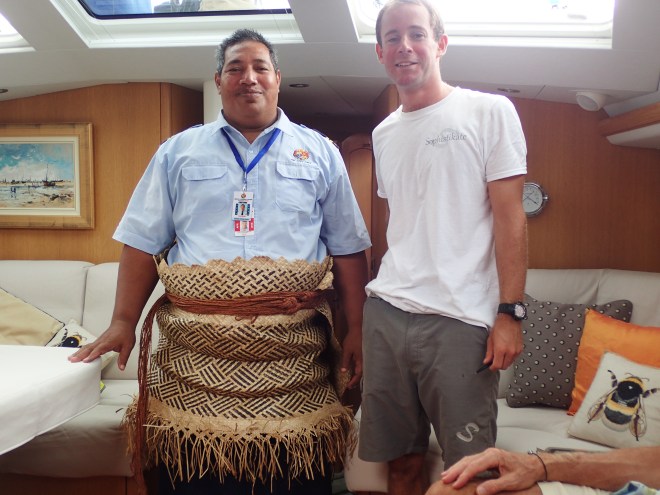
Before arriving here I had thought Tonga to be one place but in fact it is a collection of islands in three groups and not much touristy stuff going on although at this time of year there are a lot of yachties (around 500 visiting yachts a year). Property cannot be owned by foreigners but can be leased so this has kept away the multi-million dollar resorts and made way for smaller guest houses and businesses. The place is pretty unpolished, gritty and full of wonderful friendly people and pigs walking around freely in the road! There is a myriad of coves and beaches dotted around with wonderful snorkelling and diving once again and some amazing walks and hikes. As we have become used to the customs officials are such a friendly set of people and we had a wonderful chap come on board to clear us in wearing a local uniform of grass wrap over a long black skirt.
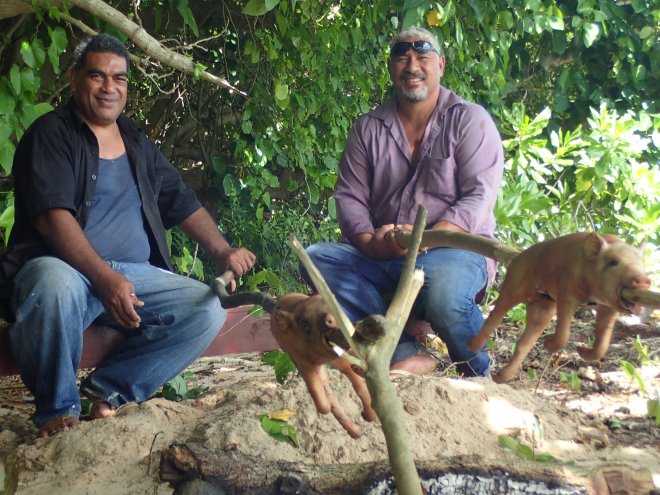
The locals organise Tongan feasts and we had the Oyster party out on a very remote island which was quite hairy to get to dotting amongst reefs and rocks! There were pigs on spits and various specialities including the local home brew (kava) which makes your face go numb! Apparently I did not try! Local girls in costume danced for us and what a wonderful experience the whole thing was.


We spent most of our time in the Vava’u Group which comprise a myriad of islands (61) all very closely packed intertwined with turquoise waterways and encircling reefs – it is apparently one of the most famous sheltered yachting grounds in the world and it is easy to see why. The capital, Neiafu, looks out over the Port of Refuge and we used this town as a base coming and going as we needed supplies or internet! We dived in a deserted cave network which was beautiful full of stalactites but eerie.


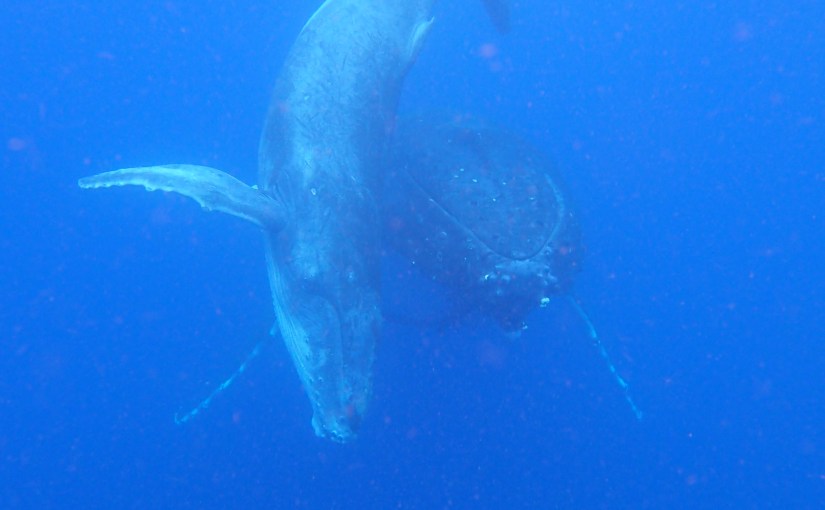
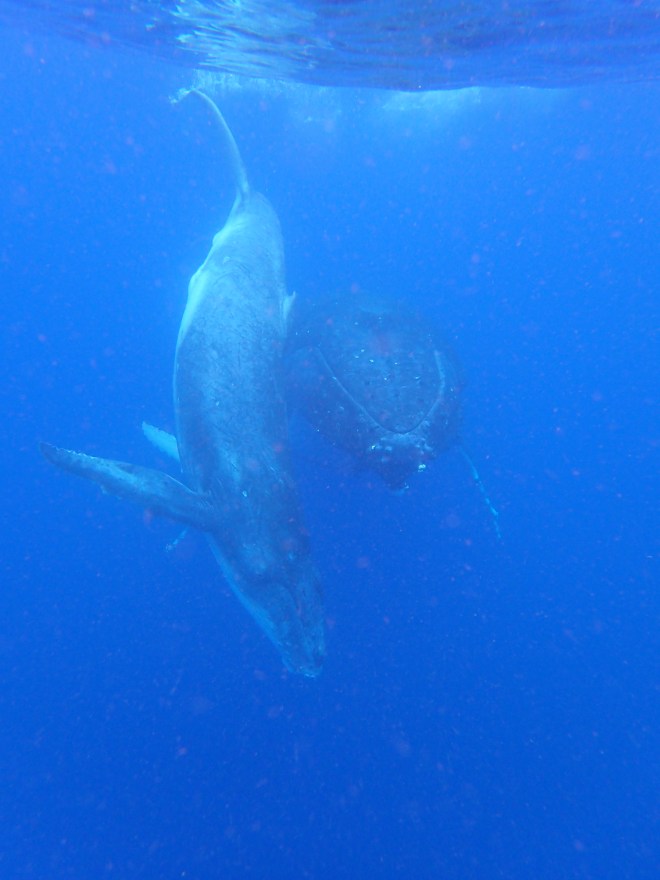
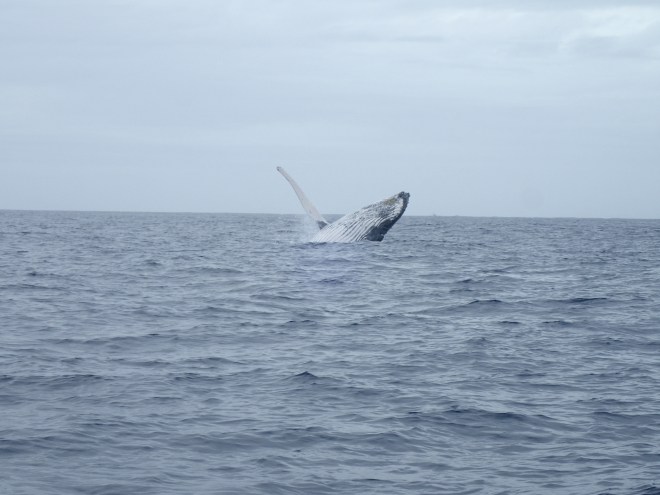
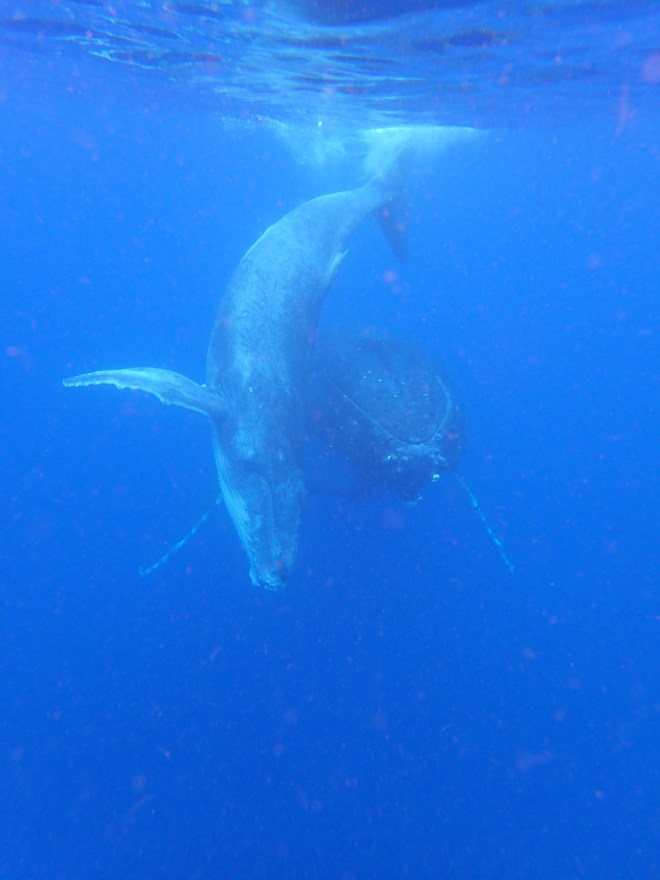
Undoubtedly the most wonderful and moving thing we have seen to date on the trip were the humpback whales. Tonga is a very important breeding ground for the humpbacks which migrate to the warm waters between June and October. They are everywhere to be seen in the calm, protected waters with some mothers with their calves and some engaging in elaborate courtship routines involving singing and breaching wonderfully. They give birth in shallow, warm waters around the island groups and breed. The low note of their songs can reach 185 decibels – we heard this whilst sitting on the boat and two whales swam under us. There is a huge whale watching industry here which does cause some concern to conservationists. There are strict codes of conduct which were introduced in 2013 to protect the whales and which the whale boat operators adhere to very rigidly and we certainly did not see anything which concerned us – of course we are not whales. Having said all of this we got into the water about 300 metres away from a mother and her calf and she actually swam towards us (four of us in the water) and she just watched us and followed us and there I was looking her in her huge eye and she looking at me. The most majestic of creatures and totally huge with her calf just playing around us and her and enjoying the fun. We tried to keep a distance but she swam towards us – it was the most amazing experience I have ever, ever had. WOW springs to mind and I get goose bumps actually just thinking about it. Although I was totally petrified at getting into the water originally as you jump off the back of the boat into open ocean and then swim – I was shaking badly at the start! The Tongan guide we had with us was very kind to us and virtually dragged Richard off the back of the boat to make sure he didn’t miss the experience!
The islands around are dotted with farmland, little villages, amazing views and totally empty beaches. The cliffs and underground caves are breath-taking and I think Richard and I can count ourselves as pretty pro snorkelers now – not bad considering Richard wouldn’t even let go of the back of the boat when we started this trip! There was an under-water cave on Nuapapu with the main entrance into it a couple of metres under the water again in the middle of the sea. The tunnel swim through is about 4m long. You have to use the swell to pull you towards it then exit when the well surges back out!!! Sadly I could not get the courage up to dive down into the blackness but the guys got some super photos for me and Go-pro coverage. Coming back in the dinghy we saw yet more manta rays – those we have seen here are the biggest spotted by us yet – just feeding in shallow water and completely unconcerned about us – maybe 8ft across just huge with massive mouths – wonderful creatures.
 Sophistikate